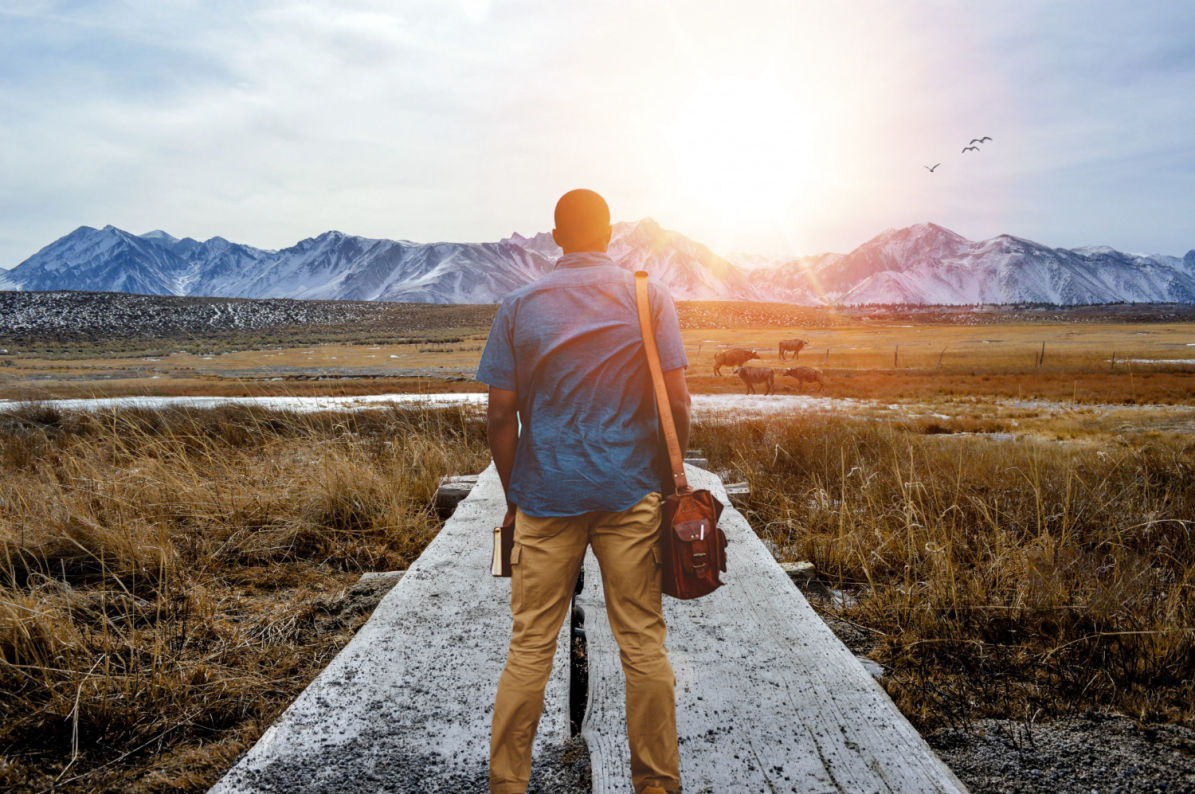
And that’s when I realized — these journeys are real in their own way. They live in imagination, in longing, in the mental maps people draw from photographs, stories, films, or even dreams. You can navigate the streets, feel the cobblestones beneath your feet, taste the food, all in your mind. And sometimes, that’s enough to change you.
People do this all the time. Travelers who dream of Patagonia, who trace the peaks in books and online images, who imagine the wind, the silence, the vastness — and carry a little of it in their daily lives, even if they never arrive. Or someone who pictures sitting in a café in Paris, watching rain drip off awnings, inhaling coffee and croissants, never buys a ticket, but remembers it as if they have.
These “ghost journeys” aren’t fantasies in the childish sense. They’re exercises of the imagination, of attention, of desire. They are journeys into possibility, into curiosity, into what could be. And in some ways, they’re safer than actual travel. They can be revisited endlessly. You can pause, rewind, wander streets without worrying about luggage, tickets, or schedules. Yet they can also be just as powerful as real trips.
I met a man once who described a hike through a forest in Oregon that he had never actually taken. He talked about mossy trees, sunlight through leaves, a creek running alongside the trail, a deer that watched him for a moment. When I asked where he had been, he said, “I just imagined it every morning for a month, until it felt real.” And it did feel real. His way of walking, his sense of patience, the way he noticed small things — the mental hike had changed him as if he’d gone there physically.
There’s a magic in this. The mind is capable of carrying experiences that shape us without stepping outside the front door. Dreams, books, stories, and images become landscapes we inhabit. They teach us to notice detail, to imagine texture, to anticipate sensation. They expand the self without a single stamp on a passport.
And sometimes, these journeys prepare you for real ones. People who have imagined Venice or Kyoto or Patagonia for years often arrive and move through the place differently than first-time tourists. They are already partially familiar, already attuned to detail, already breathing with the city, the landscape, the people. The mental journey softens the shock, heightens curiosity, deepens the experience.
It’s also comforting in a strange way. Not every journey is possible. Life, work, obligations, money — all these things limit the paths we can physically take. But imagination has no limits. You can visit any street, any mountain, any ocean, any city, any time. You can remember it, re-visit it, re-shape it, and carry it forward.
And maybe that’s the point. We don’t always need to arrive. The journey lives in us. It exists in memory, imagination, and longing. It shapes the way we see our hometowns, our neighbors, our mornings, our walks in the park. We borrow the wonder of other places and bring it home. We carry it in our posture, our thoughts, the way we speak, the way we notice light, wind, and texture.
Journeys people never took are real, not less than those with tickets and passports. They are felt, remembered, and sometimes even shared. They teach patience, observation, curiosity. They remind us that travel isn’t only a matter of geography — it’s a matter of imagination, of noticing, of letting a place, real or dreamed, move through you.
So the next time you picture a street, a mountain, a city you’ve never seen, take it seriously. Walk it in your mind. Sit in that café, hike that trail, let the ocean breeze hit your face. You’re traveling. You’re exploring. You’re changing. And maybe, just maybe, that journey will follow you into the life you already live.