Traveling alone forces you to notice things. You notice the way streetlights hit cobblestones, the sound of the rain against a tin roof, the way the baker in a corner café greets every customer with a small bow. You notice yourself noticing. There’s a self-awareness that comes when there’s no one else to distract you, no friend or partner to carry part of your attention.
And yet, you’re never really alone. There’s always someone around — the traveler next to you on a train, the family laughing at a park, the barista who remembers your order. You can engage with them if you want, or you can just observe. You can slip into moments without obligation, without compromise. That’s the paradox of traveling alone: being solitary, but not lonely.
I once spent a week in Kyoto, wandering temples, following the cherry blossoms wherever they led me. I didn’t speak the language fluently, I didn’t know anyone, and I had no plan beyond walking, taking notes, and letting the city unfold. I met people — a kind old man who showed me a hidden garden, a young woman sketching koi fish in a pond — and all those interactions were fleeting, perfect, ephemeral. I didn’t exchange numbers or make plans for next week. But they left traces in my memory, and in a way, they were more profound because of their impermanence.
Traveling alone also teaches patience. You wait for trains, for ferries, for street food to be ready, for moments of beauty to arrive without anyone complaining about the schedule or the weather. You learn to sit with yourself. Sometimes it’s boring, sometimes uncomfortable, sometimes frustrating — but often, it’s where the magic hides. Those stretches of silence, of nothing happening, let the mind wander in ways it doesn’t at home, ways it doesn’t with constant companionship.
And there’s a confidence you build. Small decisions — which street to turn down, which café to sit in, whether to take a detour — all fall on you alone. You learn to trust yourself, to read the world, to adapt. And every time you navigate a challenge, every time you make a small choice that turns into a beautiful moment, you feel the quiet pride that comes with self-reliance.
Of course, traveling alone can be scary. You feel vulnerable in ways you don’t when you’re with someone else. You realize that your safety, your comfort, your happiness, all rest with you. And that’s also the point. There’s an intensity to it, a sharpness of experience that traveling with others can dilute.
I’ve also noticed that when you travel alone, connections with others feel richer. Because you’re not insulated by familiarity, you’re more open. Conversations are more honest, gestures more meaningful. You don’t hide behind routine or companionship; you show up fully, and people respond to that. It’s almost like the world responds differently to a person who is traveling alone — a little more gently, a little more honestly, a little more alive.
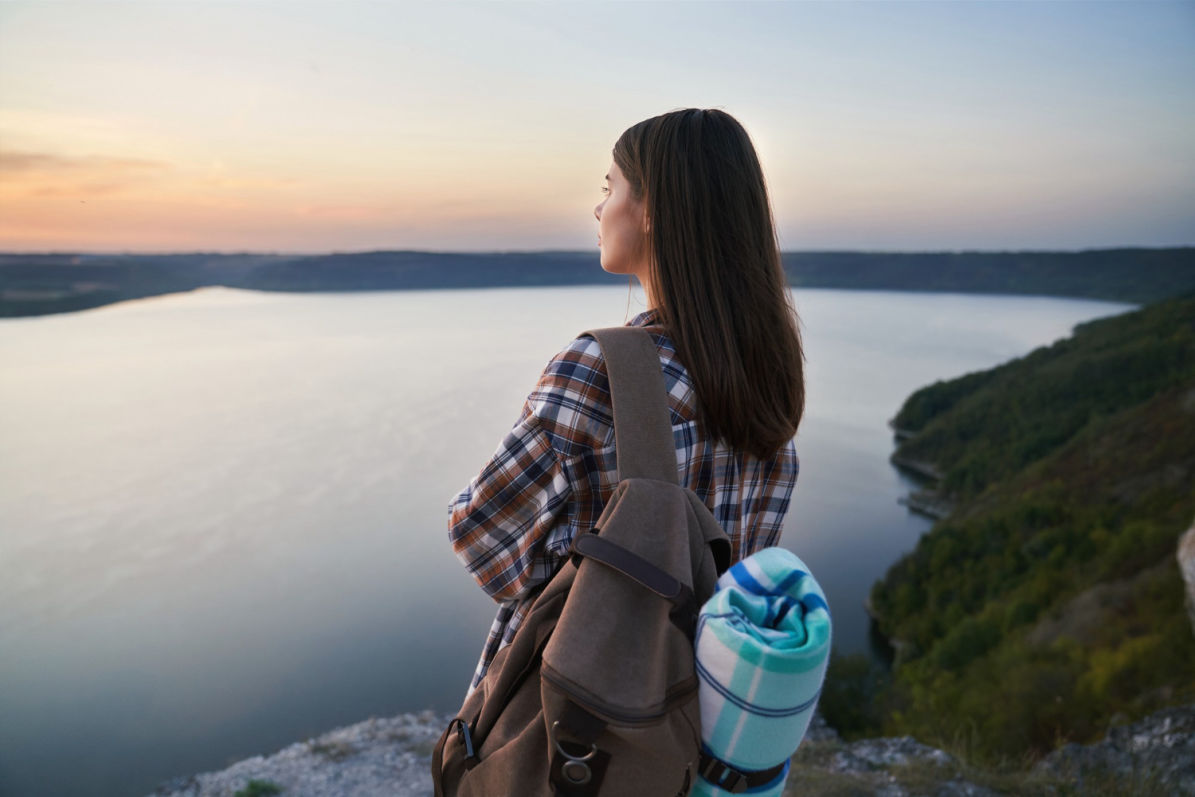
And yet, the beauty of solo travel isn’t just in the external experiences. It’s in the inner journey too. It’s in realizing you can entertain yourself, you can comfort yourself, you can enjoy your own company. You can sit by a lake, watch the ripples move across the water, and not feel the slightest pull of loneliness. You can dine at a tiny seafood restaurant, savor the flavors slowly, and relish the fact that this moment belongs only to you.
There’s a misconception that solo travel is for the lonely, or for the brave, or the reckless. But it’s none of those things. It’s for anyone who wants to explore the world, and themselves, without the filter of someone else’s expectations. It’s for anyone willing to embrace silence, uncertainty, and the small, extraordinary freedom of being fully alone — yet not lonely — in the most crowded city or the quietest forest.
In the end, traveling alone teaches you something simple but profound: you don’t need anyone to complete the journey. You only need curiosity, presence, and a willingness to see the world — and yourself — in a new light. And when you return home, you carry a part of that freedom with you, in subtle ways, in choices and habits, in the patience of a morning coffee, in the way you listen to a friend or stranger.
Traveling alone doesn’t isolate you. It amplifies your connection — to the world, to its people, and to the most important companion of all: yourself.